
Take Control of Your Life or Personal Leadership
To take control of your life as your own CEO involves adopting a mindset of personal leadership and accountability. By treating your life as an enterprise, you become the architect of your own success and opportunities.
Z. Hereford
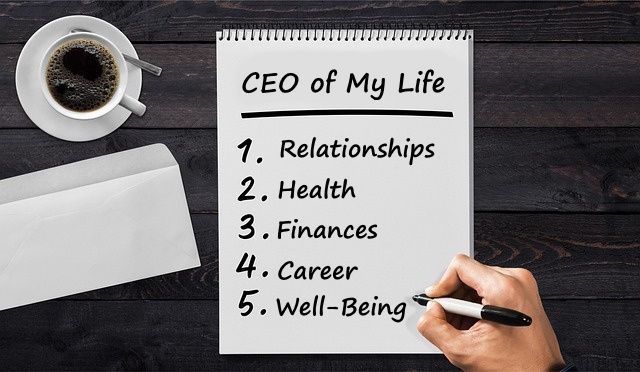
Each day, you have the choice to take control of your life or to let it control you. You can choose to be proactive or reactive. If you let various circumstances dictate how you live life, you will not have control.
Taking control of your life, or exercising personal leadership, means taking responsibility in key areas of your life.
It means connecting with your values, your vision, and setting meaningful goals for yourself. Not surprisingly, when you take control, you become more productive and more optimistic. You become emboldened to tackle and solve problems more easily and ultimately experience less stress in your life.
No doubt, with all the chaos and uncertainty in the world these days, it may be challenging to feel that you are in charge of your life, and while there are some things you have no control over, there are plenty you do.
While few of us see it as such, we are the principal architects of our lives, and where we find ourselves is the result of the choices and decisions we have made.
An interesting concept I came across in my recent readings is seeing yourself as the CEO of your own life. If you were to apply this concept to yourself, how would you run your life?
What type of strategic planning would you engage in, and how would you envision your future? I expect that seeing yourself as the CEO of your life would inspire you to think more productively and with a more results-oriented mindset.
As your own CEO, here are some ways in which you can exercise personal leadership:
✔ Determine your values and what's important to you. As I wrote in Have A Personal Value System, knowing what you value gives you structure and purpose, which, in turn, guides how you focus your time and efforts.
It would be like a company's 'mission statement'. As you probably know, a mission statement typically defines an organization's overall goals and guides its actions. It also provides a roadmap and guides management's decision-making.
Your life mission statement could be: "My purpose is to live life to the fullest by taking care of my relationships, finances, and overall happiness to the best of my abilities."
When you state your objective so succinctly, you can't help but focus on the right actions to achieve your goals. It also helps keep you on track and avoids hit-and-miss situations.
✔ Plan, be organized, and set goals. Envision the big picture of your desired life and then break it down into manageable parts. To accomplish everything you want, you need a strategy or action plan. To begin, set goals aligned with your mission statement, and devise a plan to achieve them.
Nothing happens by itself, so take charge. Rather than engaging in wishful thinking, start setting goals and planning. The planning stages can be fun and challenging! Not only will you achieve your objectives, but you will also sharpen your critical thinking and problem-solving skills.
The most successful CEOs at the world's best companies are those who set realistic, achievable goals, plan effective strategies, and execute them. They also set priorities, organize their tasks and duties, and ensure that all departments run smoothly and efficiently. There is a famous quote that states, "If you fail to plan, you plan to fail."
✔ Maintain a positive attitude. Unsurprisingly, when your best efforts to take control of your life don't go according to plan, one of the hardest things to do is remain positive. As any CEO will tell you, obstacles and roadblocks are inevitable aspects of launches and rollouts. Similarly, ask any athlete, inventor, or composer whether every endeavor comes together smoothly and without glitches. Definitely not!
Indeed, the quality or character trait that separates the successful from the unsuccessful is a positive attitude and an unshakable belief in themselves. They do not let negativity or obstacles get in the way of ultimate achievement. Of course, that doesn't mean it's easy; it means that persistence and focus are necessary.
Those who do not take control of their lives often give up at the first sign of difficulty. When that happens, all else seems to unravel, and they mistakenly feel they have no control over anything at all. This type of mindset is counterproductive and detrimental to progress. Therefore, maintaining a positive attitude is essential.
✔ Have fun. While taking control of your life involves a lot of planning, strategy, and execution, it could weigh you down if you forget to take time for some fun. Living a full, productive life requires maintaining a balance between work, relaxation, and recreation. Too much structure makes you dull and uninteresting.
So, as a strategy, to take control of your life, envision yourself as the CEO of your personal company - your life. The concept itself will make you feel more in control. Then start making the kinds of plans, choices, and decisions you would expect from a successful CEO. It will surprise you how much more in control you will feel. It may take some practice and role-playing, but the outcome will be YOU in control of your life.